
Hardwood Flooring with Micro Beveled Edges vs Square Edges
Hardwood flooring sets the tone the moment someone steps into a room. The color catches the light, the grain adds movement, and the surface anchors the entire design. But beyond species and stain, there’s a quieter detail shaping that first impression — the way each plank meets the next.
Micro beveled edges and square edges may seem like a small construction choice. In reality, that edge profile influences how the floor reflects light, how defined each board appears, and how the entire space ultimately feels. It’s a subtle distinction, yet one that can change the character of a home more than most expect.
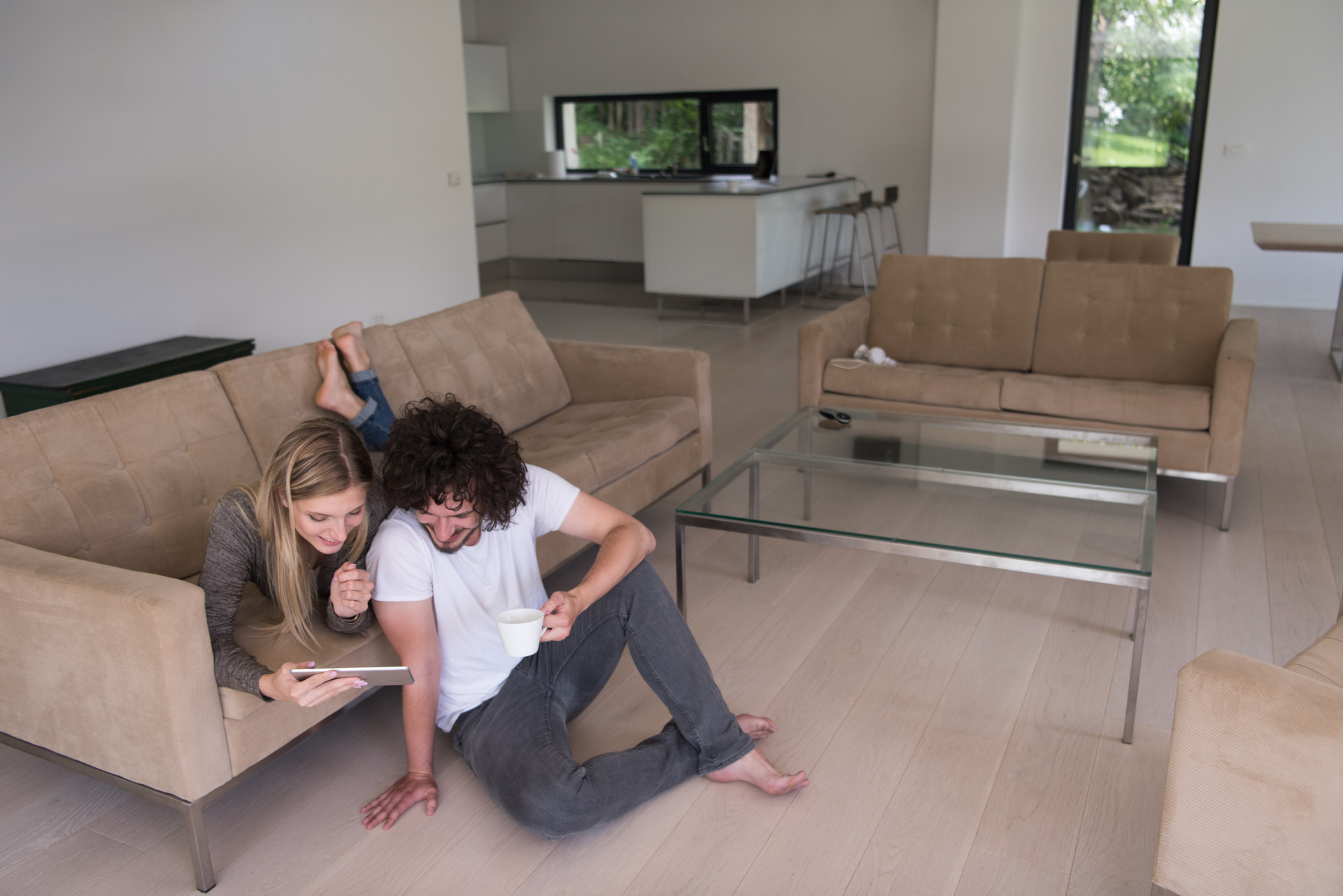
Choosing the Edge Detail That Shapes the Room
Edge style affects how each plank connects visually to the next. With hardwood flooring, that connection can either appear seamless and continuous or slightly defined and dimensional.
The choice between micro beveled and square edges is not about right or wrong. It is about the atmosphere a space is meant to create.
The Subtle Depth of Micro Beveled Planks
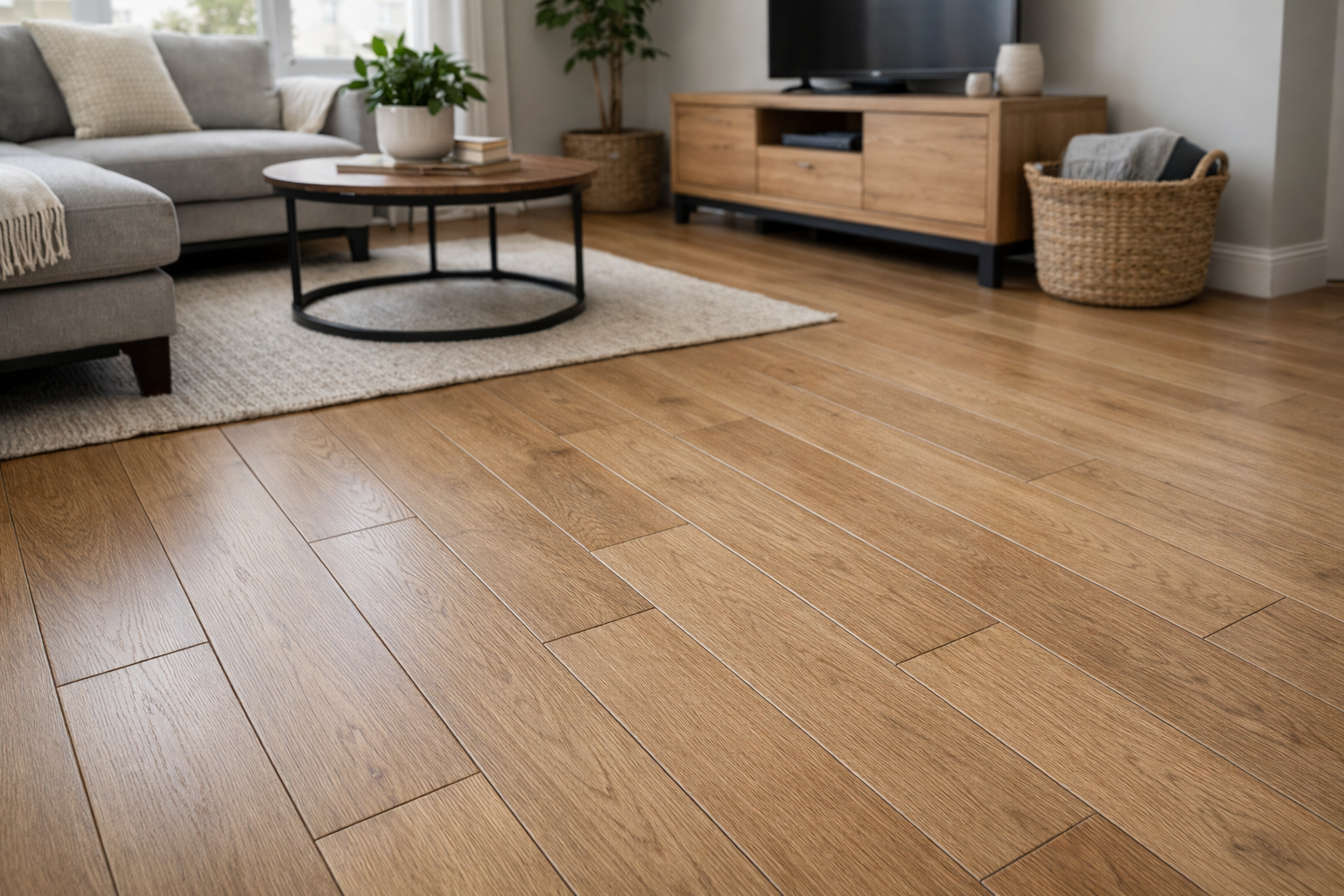
Micro beveled hardwood features a very slight angled edge along each plank. When installed, these tiny bevels create a faint “V” line where boards meet. The effect is subtle but noticeable.
This edge style:
- Adds light shadow lines between planks
- Enhances the definition of each board
- Softens minor subfloor variations
- Helps conceal slight height differences
In larger open-concept areas, micro bevels can give wide planks more character and movement. They work especially well in homes where natural light plays across the floor throughout the day, as the bevel catches and reflects light differently from flat surfaces.
From a practical standpoint, micro beveled edges are common in many prefinished hardwood collections. They help protect the finish at the edges during manufacturing and installation, reducing the likelihood of visible chipping.
The Seamless Look of Square Edge Hardwood
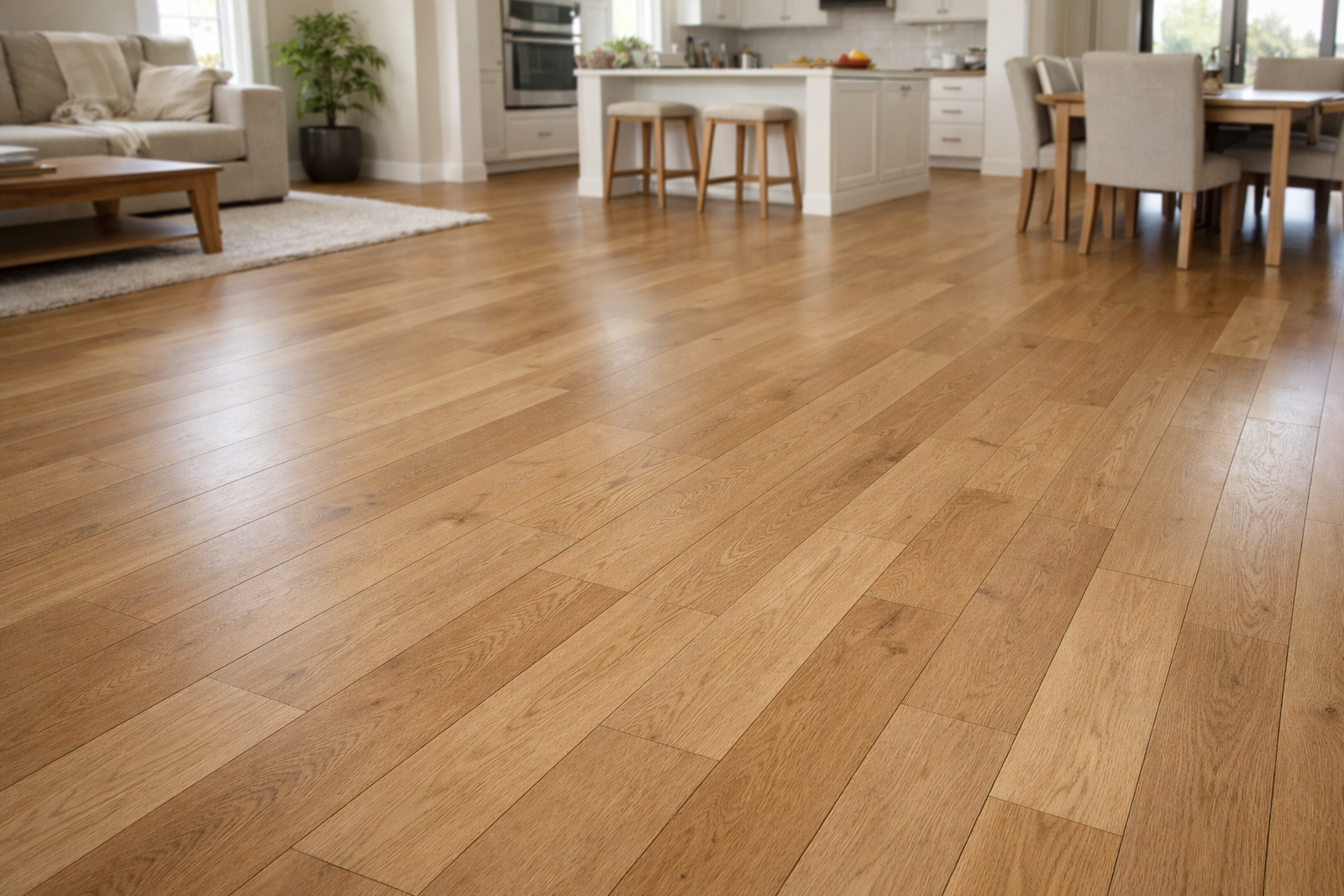
Square edge hardwood planks meet flush against each other with no visible groove. Once installed, the surface appears smooth and uninterrupted.
This style delivers:
- A clean, modern aesthetic
- A more monolithic floor appearance
- Minimal shadow lines
- A sleek, contemporary feel
Square edges are often chosen for homes leaning toward minimalist or transitional design. The floor feels unified, almost like a single expansive surface rather than individual planks.
However, square edge floors can be less forgiving when subfloors are not perfectly level. Because there is no bevel to mask tiny variations, installation precision becomes especially important.
How Edge Profiles Influence Different Design Styles
Bringing Character Into Traditional Interiors
In homes with classic trim details, layered textures, and warmer tones, micro beveled edges tend to complement the design. The gentle plank definition enhances the natural grain movement and gives the floor a slightly more dimensional feel.
For homeowners selecting oak, hickory, or other species with visible grain variation, micro bevels subtly emphasize that character.
Supporting Clean Lines in Modern Spaces
Contemporary interiors often prioritize clean lines and visual simplicity. Square edge hardwood fits beautifully into these environments. The smooth transitions between boards allow furniture, lighting, and architectural features to take center stage without visual interruption from the floor.
When paired with lighter stains or matte finishes, square edge hardwood can create a calm, gallery-like atmosphere.
Considering Maintenance and Long-Term Performance
Edge profile also influences how dirt and debris behave over time.
Micro beveled edges create small grooves between planks. While they are not deep, they can collect fine dust if routine maintenance is neglected. Regular sweeping or vacuuming keeps this from becoming an issue.
Square edges, by contrast, do not have grooves. However, because the boards sit flush, any minor seasonal expansion or contraction can be more visible at the seams.
Both styles perform well when installed properly and maintained consistently. Professional flooring installation plays a key role in ensuring either option delivers long-lasting beauty.
Prefinished and Site-Finished Floors Compared
Micro beveled edges are most common in prefinished hardwood products. These floors come with durable factory-applied finishes that cure under controlled conditions.
Square edge hardwood is often associated with site-finished floors, where planks are installed unfinished and then sanded and finished in place. This process creates a completely smooth surface across the entire floor.
Each approach has advantages depending on timeline, project scope, and aesthetic goals.
Making the Right Choice for the Space
Homes with active households may appreciate the forgiving nature of micro beveled edges. Slight plank height variations are less noticeable, and minor wear along edges tends to blend naturally.
For spaces focused on sleek design and visual simplicity, square edges offer a refined look that feels custom and cohesive.
In many cases, the decision comes down to the feeling desired underfoot and the overall design vision. Seeing samples in real lighting conditions often makes the difference clear.
A Small Edge Detail With a Lasting Design Impact
Edge profiles may seem minor compared to wood species or stain color, yet they shape the final character of hardwood flooring. Micro beveled edges introduce subtle texture and depth, while square edges create smooth continuity and modern elegance.
Both options can elevate a home when selected thoughtfully and installed with care.
When it’s time to explore hardwood flooring options in person, The Carpet Stop is here to help. Our flooring experts guide Austin homeowners through every detail — from plank style to professional installation — so the final result feels exactly right for the space. Contact us today!