
Engine-Tested Elegance: Solid vs. Engineered Hardwood for Austin’s Microclimates
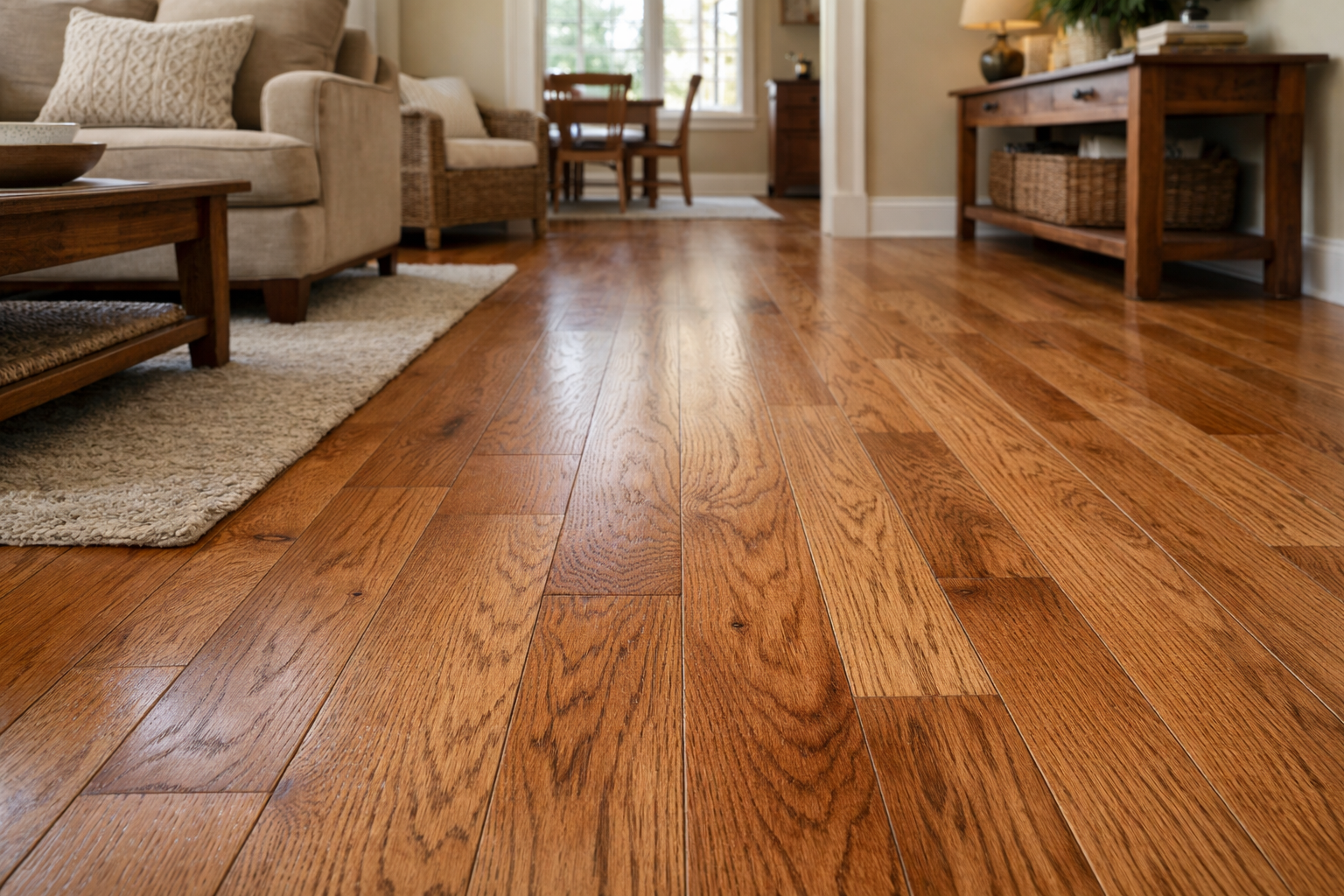 Hardwood flooring brings timeless warmth and natural character to any space, but Central Texas presents unique environmental conditions that every homeowner should weigh before choosing between solid and engineered planks. Between dry summer stretches, sudden Gulf moisture surges, and slab-on-grade construction, the structural build of your wood floor matters just as much as the species and stain you choose.
How Central Texas Climate and Foundations Affect Wood
Wood is a natural, hygroscopic material that responds to the air around it. In Austin, indoor environments often swing between air-conditioned dryness in July and humid spring mornings when patio doors stay open. Furthermore, because most homes built across Travis and Williamson counties sit on concrete slabs rather than pier-and-beam foundations, installation methods play a deciding role in which hardwood format works best.
Solid Hardwood: Traditional Craftsmanship with Specific Requirements
Solid hardwood is milled from a single piece of timber, typically 3/4-inch thick, and is prized for its longevity and ability to be sanded and refinished multiple times over decades.
Where Solid Hardwood Works Best
In Austin, solid hardwood is an ideal match for older pier-and-beam homes in neighborhoods like Clarksville, Bouldin Creek, or Tarrytown, where planks can be nailed directly into a wood subfloor. It also performs well on second-story wood subfloors in newer two-story homes, provided indoor relative humidity stays reasonably consistent year-round.
Limitations on Concrete Slabs
Installing solid hardwood directly over a concrete slab requires adding a plywood subfloor system first, which raises floor height and increases project cost. Because concrete naturally transmits vapor, solid planks installed at or below grade are also more prone to seasonal movement if moisture levels fluctuate.
Engineered Hardwood: Built for Stability in Modern Austin Homes
Engineered hardwood features a genuine hardwood top veneer bonded over multiple cross-layered plies of high-density wood. This cross-grain construction counteracts wood’s natural tendency to expand and contract.
Superior Dimensional Stability
Because the core layers run in alternating directions, engineered planks stay flatter and tighter through Austin’s seasonal humidity shifts. You still get the authentic grain, texture, and warmth of real oak, hickory, or maple on the surface, including elevated designer lines like Anderson Tuftex.
Flexible Installation Over Concrete
Unlike solid planks, engineered hardwood can be glued directly to a properly prepared concrete slab or floated over an acoustic underlayment. That versatility makes it the go-to choice for modern open-concept homes in Westlake, Avery Ranch, and Dripping Springs where homeowners want seamless wood floors flowing from the foyer into the main living area.
Practical Advice for Choosing Your Hardwood
When comparing solid and engineered options for your remodel, use these criteria to guide your decision:
- Confirm your subfloor type: Concrete slabs almost always favor engineered hardwood, while wood subfloors give you the freedom to choose either option.
- Look at the wear layer thickness: If you want the option to refinish engineered floors in the future, choose a plank with a thicker top veneer (3mm or higher).
- Prioritize wire-brushed or matte textures: Textured surfaces conceal minor dings from everyday life—like dropped keys or energetic pets—far better than smooth, high-gloss finishes.
Find the Right Hardwood with Local Guidance
Selecting hardwood is a long-term investment in your home’s beauty and value, and working with seasoned specialists ensures your floors are properly matched to your foundation and lifestyle. Learn more about The Carpet Stop and our decades of hands-on flooring expertise, or stop by our Austin showroom location on West Anderson Lane to compare solid and engineered hardwood samples side by side.