
Character-Grade Hardwood Flooring for Historic Austin Home Renovations
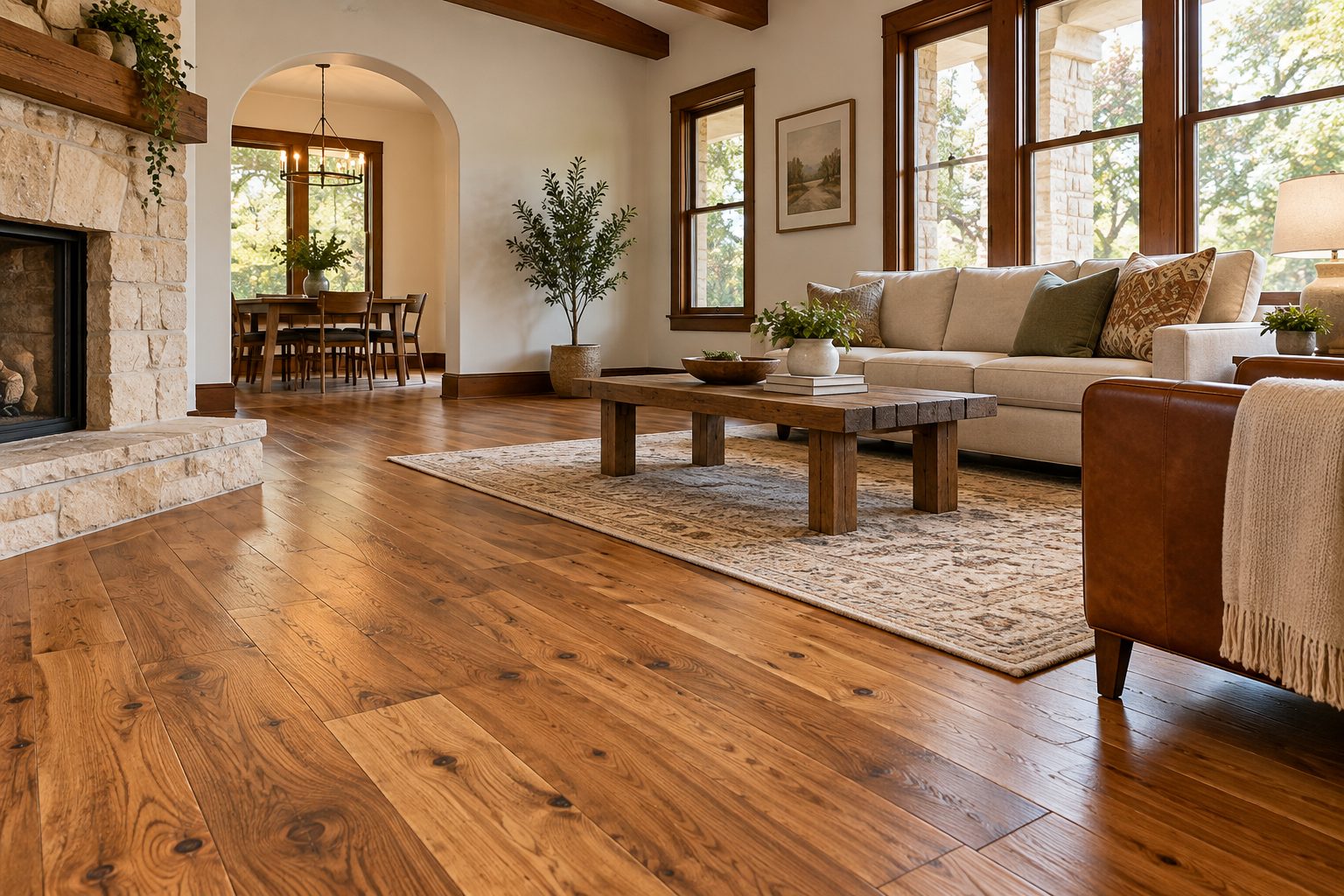
Historic homes across central Austin hold architectural details that modern subdivisions cannot duplicate. Early-twentieth-century bungalows in Hyde Park, Craftsman cottages in Travis Heights, and mid-century residences in Old West Austin celebrate authentic craftsmanship. Standard off-the-shelf lumber often looks out of place in these houses because uniform, pristine floorboards clash with aged trim, antique shiplap, and original masonry. Character-grade boards bridge this visual gap by offering organic depth that feels native to classic Texas architecture.
Natural Markings and Period Realism
Character-grade lumber, often sorted as #1 or #2 Common grade by lumber associations, embraces the natural irregularities of the tree rather than cutting them away. Standard Select and Clear grades prioritize uniform color and knot-free grain patterns. Character-grade planks highlight natural growth patterns, bringing authentic historic texture back into your living spaces:
- Open and filled knots of varied sizes that show where limbs once grew
- Dark mineral streaks created by natural nutrients drawn from Central Texas soil
- Pronounced sapwood and heartwood color variations across adjacent planks
- Surface checks, small fissures, and organic hairline cracks
- Wavy grain patterns that reflect slow-growth, mature timber
Craftsmen a century ago built with full-yield timber rather than sorted, factory-homogenized wood. Authentic hardwood flooring with natural knots and grain shifts restores period-correct weight and texture to your remodel.
Visual Harmony with Original Millwork
Older Austin residences feature hand-milled casing, tall baseboards, and structural details that show genuine patina. Smooth, pristine planks create an awkward disconnect against antique trim. Character boards soften the boundary between old and new materials, allowing original trim, exposed rafters, and interior brickwork to interact naturally with new floor surfaces.
Central Texas Climate and Foundation Stability
Renovating an older home in Austin requires balancing antique design with local climate realities. Central Texas experiences intense summer heat, strong sunlight through unshaded vintage windows, and sharp humidity swings between wet springs and dry summer droughts. Pier-and-beam foundations, common in historic central neighborhoods, allow ambient outdoor moisture to collect directly beneath subfloors.
Dense Domestic Wood Species
Different wood species handle moisture fluctuations and active households differently. Dense domestic timber withstands the local climate while fitting the architectural tone of an older residence:
- White Oak: Natural tannins provide decay resistance, while closed cellular pores resist moisture absorption during humid Austin months.
- Red Oak: Open grain patterns readily absorb stains, helping mask surface marks from tracked-in limestone dust.
- Hickory: High Janka hardness resists heavy foot traffic and pet claws, paired with strong natural color contrast.
- Walnut: Rich brown tones and softer surface characteristics suit low-traffic parlors, bedrooms, and dining spaces.
Engineered Versus Solid Planks over Crawl Spaces
Crawl spaces beneath pier-and-beam foundations often trap ground humidity. During wet seasons, wide solid planks can cup or crown as they absorb moisture from below. Stable hardwood products built with multi-ply cross-grain cores resist expansion and contraction while preserving a genuine character-grade top veneer. Solid planks remain a viable choice over reinforced, moisture-sealed subfloors where future generations may want repeated sanding cycles.
Surface Finishes for Historic Homes
The way lumber is cut, scraped, and finished dictates how smoothly it integrates with historic architecture. High-gloss, completely flat boards often highlight subfloor settling common in older foundations. Textured surfaces and low-sheen finishes soften subfloor irregularities while reinforcing historic realism.
Wire-Brushing and Surface Texture
Wire-brushing removes soft summerwood fibers from the surface, leaving dense grain ridges exposed. This texture serves practical needs in an active home:
- It conceals fine abrasions from pets and everyday dirt.
- It diffuses harsh afternoon sunlight entering through original glass panes.
- It replicates the slight wear of historic hand-planed floors.
Low-Sheen Hardwax Oils and Matte Coats
Historic floor finishes never carried the plastic shine typical of modern high-gloss coats. Matte and satin protective finishes keep the focus on wood grain and natural color tones. Penetrating oils allow the organic texture of the wood to remain tactile underfoot, highlighting character marks as intentional design elements.
Renovation Planning and Layout Details
Historic floor plans often feature distinct rooms, cozy bedrooms, and narrow hallways rather than vast open concepts. Choosing the right plank width prevents smaller rooms from feeling crowded:
- Plank Width: Wide planks measuring five to seven inches highlight large knots and mineral streaks, while narrow two-and-a-quarter-inch planks replicate early-twentieth-century historic profiles.
- Board Transitions: Historic doorways benefit from custom flush wood reducers that handle slight elevation differences between original subfloors and new living areas.
- Subfloor Leveling: Settled floor joists need leveling and structural support before laying new boards to prevent squeaks.
To see how board widths, wood grains, and stain colors look under your actual room lighting, our shop at home service brings full-sized flooring samples directly to your doorstep.
Visit Our Austin Showroom Today!
Evaluating wood textures, grain variations, and plank widths requires seeing physical samples in person. Stop by our showroom in Austin, TX, to compare domestic oak and hickory species, inspect wire-brushed finishes, and examine character boards side by side. Contact our experienced staff or schedule a design consultation to plan your historic home flooring project with materials selected for long-term Central Texas performance.
About The Carpet Stop
Serving Austin, TX homeowners since 1996, The Carpet Stop provides practical guidance, expansive flooring selections, and skilled craftsmanship under the leadership of industry veterans Jim Tersigni and Bob Fuller. With decades of hands-on wholesale, manufacturing, and local installation experience, the team helps residential property owners choose surfaces that balance architectural style with daily performance. From our central showroom on West Anderson Lane, we deliver straightforward advice, personalized customer service, and durable flooring solutions across Central Texas.