What’s the Difference Between Commercial-Grade and Residential Carpet?
The main difference between commercial-grade and residential carpet comes down to pile construction, fiber density, and intended performance. Commercial carpet uses tight, low-profile loops engineered to withstand heavy foot traffic, rolling casters, and frequent cleaning. Residential carpet uses taller, softer cut piles designed for underfoot plushness, warmth, and sound dampening.
Choosing the right flooring depends on how you use your space, your expectations for comfort, and your maintenance routine. At The Carpet Stop, our team helps you balance manufacturing specifications, everyday durability, and design styles so you get premium flooring at everyday warehouse values.
Quick Answer: Commercial vs. Residential Carpet at a Glance
If you need a fast comparison to guide your flooring project, these core differences set the two styles apart:
- Pile Height and Density: Commercial carpet features short, compact loops (often level loop or berber styles) that resist crushing under heavy pressure. Residential carpet features taller cut fibers that bend slightly under your feet to provide a plush, cushioned feel.
- Underfoot Cushioning: Residential carpet relies on a separate, thick carpet pad (typically 7/16-inch to 1/2-inch foam) for comfort. Commercial carpet is installed either directly glued to the subfloor or with a thin, high-density attached cushion.
- Fiber Types: Commercial products prioritize high-performance solution-dyed nylon or polypropylene (olefin) for maximum stain and fade resistance. Residential carpets feature soft-touch nylon, triexta, or polyester crafted for cozy living areas.
- Maintenance Demands: Low-profile commercial loops make vacuuming and spot-cleaning simple because dirt stays near the surface. Residential carpets require regular deep vacuuming to lift soil from deeper within the pile.
- Typical Lifespan: In heavy traffic, commercial carpet can endure 10 to 15 years without matting down. Residential carpet lasts 7 to 15 years depending on fiber quality, foot traffic, and padding support.
Pile Construction and Texture: Tight Loops vs. Deep Cut Piles
Understanding carpet anatomy helps you select the right texture for your daily activities and lifestyle needs.
How Commercial Carpet Is Built
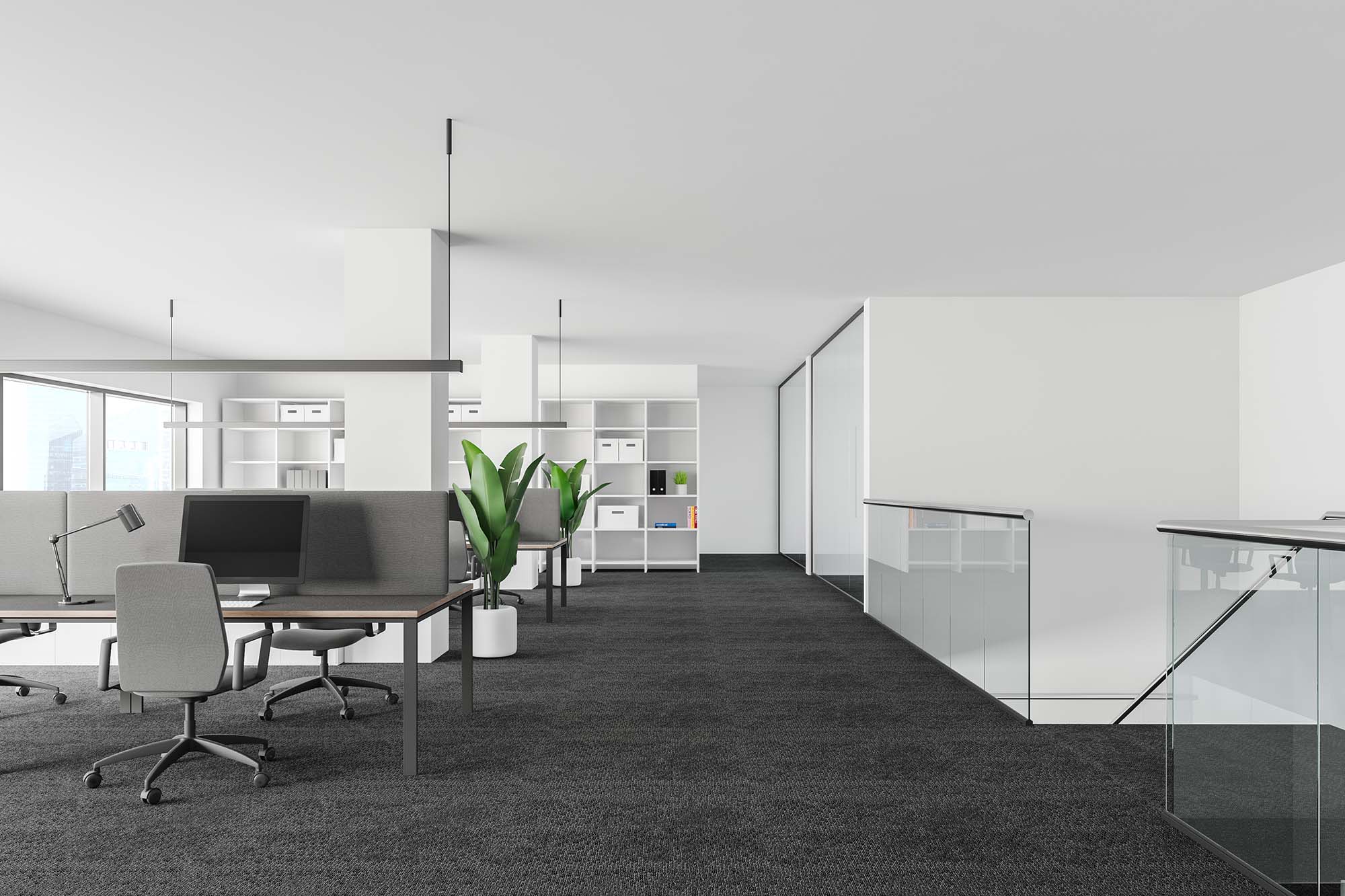
Commercial carpet is engineered for resilience. Manufacturers like Philadelphia Commercial and Aladdin Commercial weave yarn into dense, low-profile loops. Because the yarn loops remain intact and packed closely together, foot traffic moves across the tips of the fibers rather than bending them sideways.
This tight construction prevents the unsightly tracking patterns and flattened pathways that often develop in busy corridors. While it feels firmer underfoot, it ensures that office chairs roll smoothly and heavy furniture leaves minimal indentations over time.
How Residential Carpet Is Built

Residential carpet is engineered for relaxation. Styles like textured plush, frieze, and velvet cut pile are created by cutting the tops of the yarn loops so the fibers stand upright. Premium collections, such as Anderson Tuftex, showcase beautiful visual depth, subtle shading, and rich textures.
The individual yarn tufts flex when you step on them, giving your bedrooms and living rooms an inviting, cozy sensation. However, because cut pile fibers are taller and more exposed, they can show footprint paths and vacuum marks more readily than commercial styles.
Fiber Types, Wear Resistance, and Local Climate Demands
Carpet fibers must handle the specific environmental demands of your home or workspace. In Central Texas, your flooring faces intense summer heat, strong UV sunlight streaming through large windows, and limestone dust or Hill Country mud tracked inside from the outdoors.
Solution-Dyed Nylon
Solution-dyed nylon is the premier choice for commercial spaces and busy homes alike. During manufacturing, the color pigment is added directly to the liquid polymer before the fiber is extruded. This means the color runs all the way through the strand like a carrot rather than an apple. When intense sunlight pours through your windows in Cedar Park or Round Rock, solution-dyed fibers resist fading. They also resist harsh cleaning chemicals and bleach-based disinfectants without losing their color.
Polypropylene (Olefin)
Often found in commercial loop carpets and carpet tiles, olefin is naturally resistant to moisture, stains, and mildew. It works exceptionally well in light commercial environments, rental properties, and finished basements. Because it has a lower melting point than nylon, it is best suited for areas without high-friction dragging.
Stain-Resistant Residential Polymers
For residential settings, advanced fibers like those found in Pet Perfect collections by Shaw Floors provide active families with built-in stain and soil protection. These fibers prevent pet accidents, spilled drinks, and tracked-in red clay from penetrating the core of the yarn. This allows you to clean up messes quickly without sacrificing that soft, barefoot-friendly touch.
For households managing seasonal allergies or Central Texas cedar fever, low-profile carpet options make it much easier to vacuum away trapped pollen and dander before they circulate through your air.
Cushioning, Backing, and Subfloor Installation
The way carpet attaches to your subfloor dictates both its walking comfort and its structural longevity.
Commercial Installation Methods
Commercial carpet is commonly installed using a direct glue-down method or with modular carpet tiles over concrete slab subfloors. Gluing the carpet directly to the concrete slab eliminates shifting, bubbling, and ripples, even under heavy rolling carts or constant foot traffic. While this method sacrifices plushness, it provides unmatched structural stability.
Many businesses and home offices now opt for cushion-backed carpet tiles. If a spill or severe stain occurs, you can lift and replace an individual tile in minutes without replacing the entire room.
Residential Installation Methods
Residential carpet relies heavily on a separate cushion installed over tack strips around the perimeter of the room. The carpet pad acts as a shock absorber. Up to 50 percent of the comfort and wear life of your residential carpet comes directly from the quality of the cushion underneath it. Thick padding insulates your rooms against cold concrete slabs during winter months and absorbs sound between floors.
Can You Install Commercial Carpet in Your Home?
Yes, you can install commercial carpet in your home, and in many situations, it is a smart, cost-effective decision.
Consider commercial carpet or modular carpet tiles for these residential areas:
- Dedicated Home Offices: If your office chair rolls back and forth all day, commercial carpet prevents the fiber crushing that ruins plush carpets.
- Basements and Walkout Suites: Glued-down carpet tiles handle concrete slab moisture fluctuations better than thick residential pads.
- Staircases and Hallways: Tight commercial loops provide excellent grip, prevent slipping, and withstand the heaviest foot traffic in your house.
- Kids’ Playrooms and Craft Spaces: Modular tiles allow you to swap out damaged sections when paint, markers, or juice spills happen.
- Rental Units: Commercial broadloom offers long-term durability and lower replacement turnover costs.
If you love the clean look of commercial carpet but still want a soft touch for bare feet, our team can help you select higher-ounce loop patterns or add an attached commercial cushion layer.
How to Choose the Right Carpet for Your Space
To decide which style fits your project best, ask yourself these practical questions:
- How much foot traffic does the room receive? For bustling entryways and workspaces in Georgetown or Pflugerville, commercial density offers superior longevity. For master bedrooms, residential plush is unmatched.
- Do you have pets or young children? Look for solution-dyed fibers or specialized stain-resistant residential collections that resist claws and pet accidents.
- What is your budget? Commercial carpet can be very economical per square foot, especially when eliminating separate padding costs, while luxury residential carpets offer high-end design value.
- How important is acoustic insulation? Thick residential carpet paired with premium padding absorbs ambient sound and echoes far better than low-profile commercial styles.
Frequently Asked Questions
Is commercial carpet cheaper than residential carpet?
Commercial carpet often has a lower entry-level material cost per square yard, and direct glue-down installations eliminate the need to purchase separate carpet padding. However, high-end patterned commercial carpets and designer carpet tiles can match or exceed the price of premium residential carpets.
Does commercial carpet require a separate pad?
Traditional commercial carpet is usually glued directly to your concrete slab without a separate pad. However, modern commercial carpet tiles often come with built-in cushion backings that provide slight shock absorption, thermal insulation, and moisture protection.
Can commercial carpet handle pets better than residential carpet?
Commercial carpet resists wear, crushing, and muddy paws exceptionally well, but standard loop piles can snag on pet claws. If you have cats or dogs that scratch, choose a dense, low cut pile commercial style or a dedicated pet-friendly residential carpet designed with snag-proof backing.
How long does commercial carpet last compared to residential carpet?
Commercial carpet can easily last 10 to 15 years or more in high-traffic settings without crushing. Residential carpet typically lasts 7 to 12 years, though well-maintained premium carpets with proper padding can perform beautifully for up to 15 to 20 years.
Ready to find the right floors for your home or business at everyday warehouse prices? Stop by our showroom in Austin, TX, book our Shop at Home service, or schedule an in-home measure with our team. We proudly serve you across Austin, TX, Cedar Park, Round Rock, Lakeway, Georgetown, Liberty Hill, Manor, Elgin, Hutto, Dripping Springs, Pflugerville, Leander, Kyle, and Buda, TX.